Systemic failure in disaster response
Five Days at MemorialSystemic failure in disaster response is the book’s framework for understanding how a natural hazard becomes a human catastrophe through accumulated weaknesses in institutions, infrastructure, planning, and communication. In New Orleans during Hurricane Katrina, the failures did not occur one at a time or in isolation. Flood protection, evacuation logistics, hospital power, rescue coordination, and official awareness of the unfolding emergency proved interdependent. The result was a crisis in which risks known in advance became immediate, and people who depended on others for transport or medical care had few safe alternatives.
Failure Before the Storm
The city’s evacuation order came only after hours of delay, while many residents lacked cars or another way to leave. Officials knew the transportation plan had serious gaps, including too few drivers. Residents who could evacuate independently were already caught in traffic, while the New Orleans Superdome was designated a shelter of last resort for those who could not get out. People with medical conditions were directed there, but the mayor did not specify what assistance would be available. Essential hotel workers and jail staff were exempted from evacuation, as were hospitals and their workers, on the grounds that injured people would need somewhere to go. The plan thus treated hospitals as safe refuges without resolving how they would function if the surrounding city flooded.
The transport shortfall quickly became concrete. Dispatchers at Acadian were overwhelmed by requests to move patients from hospitals, nursing homes, and homes. Many of the company’s available ambulances were stuck on the interstate; some began taking patients to the Superdome rather than attempting to carry them out of the city. At Chalmette Medical Center, the first critically ill patients were evacuated, but the ambulances did not return. Elsewhere, administrators who wanted to move nine of their sickest patients to western Louisiana faced clogged roads that could leave patients in an ambulance for as long as a day. The crisis exposed a basic mismatch between the order to leave and the means available to those least able to leave unaided.
These immediate problems followed years of warnings. A federal emergency exercise had modeled a catastrophic hurricane with more than two thousand hospital patients in New Orleans, yet planners had not worked out how to move so many people to safety through floodwaters. Federal health officials had not participated in the latest planning sessions. A grant program had provided Louisiana more than $17 million for hospital preparedness, but by the day before Katrina’s landfall, all but two of the region’s hospitals had generators, electrical switches, or both at ground level. The exercise anticipated the presence of patients; the system had not secured a workable way to protect or evacuate them.
Memorial’s Known Vulnerabilities
At Memorial Medical Center, the danger was not wholly unforeseen. After Hurricane Ivan’s near miss, plant operations director Eric Yancovich studied storm-surge models with the U.S. Army Corps of Engineers. The models indicated that a major storm could put twelve to fifteen feet of water around the hospital, which stood three feet below sea level. Yancovich sketched the hospital’s elevations on lined paper, measuring entrances and outdoor equipment against Magnolia Street. His calculations showed that less than four feet of street flooding could carry water over the loading dock and into the hospital.
The generators themselves were elevated on the second floor, but that did not make the power system secure. Yancovich identified transfer switches and other essential parts of the emergency distribution system at or near ground level, where flooding could disable the equipment that connected generator power to the hospital. He warned his supervisor that relatively little water could incapacitate most of the medical center and predicted that patients might have to be moved to the newer Clara Wing. Floodgates and a raised vent for underground fuel tanks offered some protection, but proposed work to elevate transfer switches and pumps for medical air and suction was not completed. A partial bid for electrical work exceeded a quarter of a million dollars; the hospital cited lack of capital and left the proposal on file.
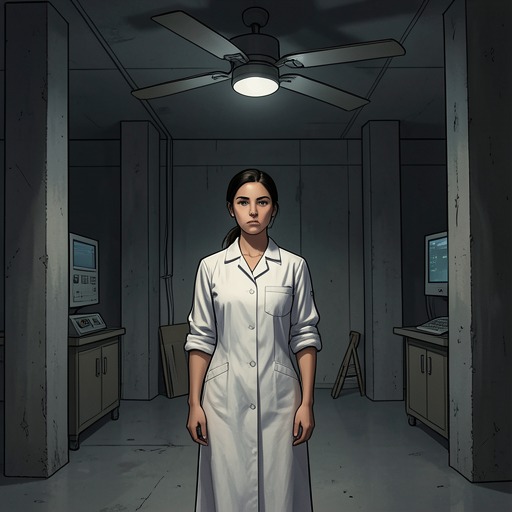
The weakness lay in the connections between components, not simply in the generators. During the crisis, maintenance workers—none of them generator mechanics—tried to keep the three 750-kilowatt units running, although the equipment had not been built for prolonged operation and the disaster plan expected it to support the hospital for three days. Workers restarted an overheated engine by adding water, then confronted low oil pressure and attempted to prime motors with diesel. As outages spread, engineers waded through knee-deep basement water to inspect transfer switches and distribution panels. About a third of the automatic transfer switches were at a low level and appeared to be submerged. Attempts to connect the load from a failed generator to a working one produced signs of a short circuit; workers shut off branch circuits and tried to salvage parts, but another generator failed. At about two in the morning on August 31, the last generator surged and died. The hospital’s electrical system had become a chain of dependencies in which flooding at vulnerable points could defeat elevated generators.
A Crisis of Coordination and Awareness
The failures extended beyond equipment. In the book’s account, blame for decisions inside hospitals cannot be separated from the conditions in which they were made: government agencies, private organizations, and journalists later examined actions and omissions at many levels. New Orleans’s flood-control system had known weaknesses, and the failure to address them had saved money in the short term. The city’s losses also reflected the delayed evacuation order, inadequate buses and drivers, uncoordinated rescues, poor communications, and conflicts over responsibility between agencies and levels of government. Hospitals and nursing homes had not evacuated before the storm or invested in backup power and water systems capable of withstanding a prolonged emergency.
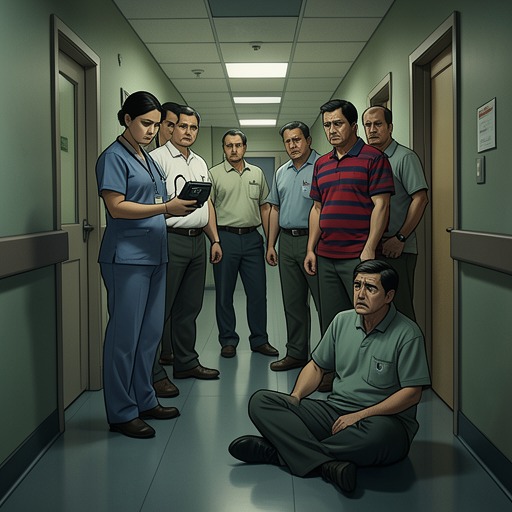
Rumors of widespread violence further distorted the response. Fear of lawlessness interrupted rescues and led some first responders, including medical workers at the Superdome, to abandon posts and patients. Later reporting found that many of the worst crimes reported at the time had not occurred, even though real violence and serious misconduct also took place. The distinction matters to the book’s analysis: inaccurate threat information did not merely misdescribe the crisis; it shaped decisions, diverted attention, and compounded the danger. Underlying the official response was a lack of situational awareness—a failure to grasp the larger picture of what was happening and what needed to be done.
The narrative places Katrina within a longer history of warnings and missed opportunities. Reports had described the danger, and the Hurricane Pam exercises had modeled a disaster of this kind. The account also traces the vulnerability of the levee and flood-control system to decisions extending back decades, including its increasingly federalized management after the 1927 Mississippi River floods. The point is not that one historical decision explains every later loss, but that risks persisted through time while investments and preparations failed to keep pace with what was already knowable.
Different Outcomes Under Similar Pressure
Charity Hospital provides a revealing contrast. It flooded and lost power, plumbing, computers, telephones, and elevators; it had no helipad, fewer staff relative to its patient population, and no corporate overseer to assist. Its transfer of all patients took until Friday afternoon, September 2, a day later than Memorial’s evacuation. Yet fewer than ten patients died, despite the presence of more than twice as many patients across Charity’s two campuses as at Memorial and severe threats to the evacuation.
Charity’s staff had prepared for a Category Three hurricane and levee failure. With federal preparedness funds, the hospital had acquired portable generators, oxygen-powered ventilators, and a ham radio system, and its security officers had received disaster training. During the emergency, workers siphoned gasoline from cars to run ten small generators, powering ventilators and cardiac monitors and helping keep critically ill patients alive, including a very premature infant. At Memorial, by contrast, patients were ventilated by hand after the power failed; two similar generators were later used for lights and fans in common areas and at the helipad, rather than for medical equipment.
Preparation mattered, but the account also emphasizes the ways people sustained coordination under pressure. Charity’s leaders held meetings every four hours in the lobby, bringing together workers from doctors to janitorial staff. Employees staged a flashlight-lit talent show, maintained services such as physical and occupational therapy, and tried to preserve shifts and regular sleep. Leaders also worked to limit rumors by instructing staff to report only what they had seen. Most consequentially, Charity did not classify a group of patients as too ill to rescue: its sickest patients were taken out first. The comparison shows that scarcity alone did not determine the outcome; preparedness, shared information, routine, and evacuation choices also shaped what care remained possible.
Repetition, Responsibility, and Local Action
The book’s wider examples suggest that systemic failure can recur even after a disaster makes its costs unmistakable. During later preparations for a possible hurricane, a nonprofit hospital parent company operated a local command center and offered organized assistance to its own hospitals and others in the region—support that contrasted with what Tenet Healthcare Corporation and LifeCare had provided their hospitals during Katrina. Yet some staff still had not planned for a complete loss of power, including failure of the backup plan to the backup plan. The episode presents preparedness not as a document completed once, but as a continuing practice of identifying dependencies and imagining how safeguards themselves might fail.
The same vulnerability appeared in the aftermath of the 2010 earthquake in Port-au-Prince. A field hospital identified one patient only as Jane Doe 326 because staff struggled to record unfamiliar names. Nathalie LeBrun needed oxygen; an initial tank ran out overnight, and the team had to find another. A portable oxygen concentrator repeatedly overheated, while its need for electricity collided with a shortage of generator fuel. The episode extends the book’s argument from New Orleans: medical care depends on supply chains and infrastructure beyond the bedside, and a device that seems to offer a solution can itself rely on a fragile system.
The concept does not absolve individuals of responsibility, nor does it erase the consequences of individual decisions. It places those decisions within a landscape of failing systems while insisting that local action can still matter. In the critical first hours of a calamity, people with the resources, knowledge, and authority to help in their immediate surroundings may have greater effect than distant systems that are slow, fragmented, or already overwhelmed. The disaster’s most unsettling lesson is therefore double: institutional failures can make foreseeable danger catastrophic, but the way people prepare, communicate, improvise, and treat those most dependent on rescue can alter what happens within that failure.